Miraculous Healings: The Unexplainable Restored Health
One of the most awe-inspiring ways God shows up in our lives is through healing—often in ways that leave us speechless. While doctors do incredible work, there are stories that even medical experts can’t fully explain. And for those who’ve experienced these moments firsthand, the only explanation is God.
Story of Healing Through Faith
Sarah had lived for years with a painful autoimmune condition. Nothing seemed to help, not the treatments, the specialists, or the countless lifestyle changes. One night, worn out and out of answers, she attended a prayer gathering. She didn’t expect anything dramatic, but as others prayed over her, she felt a quiet peace settle over her heart.
The next morning, something had changed. She woke up with energy she hadn’t felt in years—and for the first time in a long time, no pain. Doctors later confirmed that the markers of her illness were gone.
Sarah’s story isn’t just about recovery; it’s about the quiet, persistent power of faith. And she’s not alone. Study after study, including one from the Journal of Religion and Health, shows a real connection between prayer, community, and emotional well-being. But stories like Sarah’s suggest something even deeper—a reminder that God still moves in miraculous ways.
.
Unexpected Blessings: Provision in Times of Need
Not all miracles look dramatic. Some come in the form of quiet provision—right when we need it most.
Testimony of Provision
Michael, a single father, had reached the end of his rope after losing his job. Bills piled up, his savings ran dry, and he felt like he was out of options. In desperation, he turned to prayer—not for wealth, but simply for enough.
Days later, a friend unexpectedly offered him a freelance project. It paid his immediate bills and opened the door to long-term work that aligned with his passion for graphic design.
Michael sees that moment as a miracle. Not because it solved everything instantly, but because it reminded him that God sees, God hears, and God provides—even through ordinary people and unexpected opportunities.
According to the Pew Research Center, 84% of Americans say they’ve experienced some form of a miracle. And often, those miracles come disguised as timely help, unexpected phone calls, or quiet nudges from the Holy Spirit.
.
His experience shows how God’s intervention can come in many shapes and sizes, encouraging us to recognize the miracles that often disguise themselves as routine blessings in our daily lives.
Answered Prayers: The Power of Faith
For many believers, the most intimate miracles are the ones that come through prayer. Sometimes they’re dramatic; sometimes they’re quiet. But all of them matter.
A Mother’s Unwavering Faith
Joy lit a candle every evening and prayed for her son, who was deployed overseas. It became her daily rhythm, a small act of trust in the middle of uncertainty.
One day, her son shared a chilling story. During a mission, he’d made a last-minute decision to take a different route. That decision likely saved his life, as the original path had come under attack shortly after.
Joy didn’t need any more proof. To her, that change in direction was an answer to prayer—a moment of divine protection in response to quiet, consistent faith.
When Community Becomes the Miracle
Some miracles don’t come through a single prayer or healing, they come through the people God places around us.
A Church That Showed Up
When one family in a small church was overwhelmed by illness and mounting bills, the community didn’t wait for someone else to step in. They organized a fundraiser—not a flashy one, but one filled with warmth. People shared testimonies, offered prayer, sang together, and gave what they could.
By the end of the night, the family had what they needed to get through that season. More than that, they felt seen and held. In their darkest moment, the hands and feet of Christ showed up—through their very own community.
Sometimes the miracle is the provision. Sometimes, it’s simply knowing you’re not alone.
What These Stories Remind Us
These moments remind us that miracles aren’t just a thing of the past. They’re happening today—in homes, hospitals, churches, and quiet corners of the world. Some are dramatic, others so gentle we might miss them if we’re not paying attention.
But they’re real.
Whether it’s a physical healing, a timely provision, an answered prayer, or the strength of community showing up just when we need it most—God is still working. Still moving. Still writing stories of restoration and hope.
So maybe you’re wondering if miracles still happen. Maybe you’ve been praying for one. Or maybe, just maybe, you’ve already experienced one without realizing it yet.
Keep your heart open. Keep asking. Keep reflecting.
Because the miracle might be closer than you think.
Parenting today can feel like trying to find your way through a maze. There’s so much coming at our kids—new ideas, shifting values, constant noise—and sometimes it feels like everything we’re trying to teach them about faith is getting drowned out. But raising children who love and follow God is possible. It just takes intention, prayer, and grace for the journey.
Start Early: Instilling Christian Values from the Beginning
From birth, children are impressionable and eager to learn. This early stage is crucial for instilling core Christian values that will guide them throughout their lives. Every interaction is significant, so consider incorporating simple, faith-based practices into your daily routines.
Build Simple Faith Traditions
Something as small as reading a Bible story before bed or praying before meals can plant seeds that grow over time. Family devotions don’t have to be long or formal. Just carve out a moment each week to read God’s Word together, ask a few questions, and pray. Research even backs it up—families who keep faith-based routines are much more likely to raise kids who hold onto that faith as they grow.
Teach Through Story
Children connect with stories. Use the Bible to show them what love, compassion, courage, and obedience look like. A story like the Good Samaritan opens up natural conversations about kindness, and stories of David or Esther help them see what it means to trust God when life feels big or scary. Faith becomes real when it’s woven into everyday conversation.
Engaging With Culture Instead of Avoiding It
We can’t shield our kids from the world—but we can prepare them to walk through it with wisdom. That means talking openly about what they’re hearing, watching, and experiencing. Instead of just saying “don’t watch that,” we can ask, “What do you think this story is teaching?” or “How does that line up with what we believe?”
Create Space for Honest Conversations
Ask your kids what they’re seeing online or hearing from friends. Let them wrestle with questions and doubts without fear of being shut down. When they know they can talk to you about anything—and that their faith can handle tough questions—they’re more likely to stand firm when it counts.
Let Them See Your Faith in Action
Kids are always watching. How we handle stress, conflict, money, and relationships—those are the real-life sermons they remember. When they see us pause to pray about a tough decision, speak kindly under pressure, or serve someone in need, it leaves an impression that lasts far beyond Sunday morning.
Create a Home Where Faith Can Grow
Our homes don’t have to be perfect. But they can be places of peace, grace, and presence—where God’s Word is welcome, and worship is part of the rhythm of daily life.
Dedicate Space for God Moments
It might be a cozy corner with a Bible and a candle, or just a quiet moment after dinner where everyone shares a prayer request. Creating space for reflection tells your kids, “This matters here. God matters here.”
Build Fellowship Into Your Family Life
Faith grows in community. Invite other families over for dinner and talk about things that matter. Go to church events as a family, or host a small group. Let your kids see that following Jesus isn’t something we do alone.
Equipping Kids for Modern Pressures
Today’s kids are growing up in a world where constant comparison, temptation, and distraction are just a scroll away. But we don’t have to panic—we can prepare them.
Teach Them to Think Critically
Help your children learn to evaluate what they see. Talk about media messages and online trends. Encourage them to ask: “Does this reflect truth? Is this drawing me closer to God?” That kind of discernment is something they’ll carry into adulthood.
Practice What-if Scenarios
Run through situations they might face, like peer pressure or hard conversations. Ask, “What would you do?” Talk through how to respond with both truth and kindness. These moments build spiritual confidence and resilience.
Strengthen the Bonds That Hold Everything Together
At the end of the day, your relationship with your child is the soil where faith grows. Strong families—ones filled with love, trust, and time together—give kids the security they need to thrive.
Make Time Together a Priority
You don’t need grand plans. Cook together. Go on walks. Serve somewhere as a family. Let these moments create room for connection and real conversations. Often the best spiritual lessons happen in between the everyday tasks.
A family in a kitchen cooking together
Check In Often
Build a habit of checking in. “How’s your heart?” “What’s been hard this week?” “What are you praying about lately?” These small questions can open big doors and show your child that you’re present and that their spiritual life matters.
Keep Planting the Seeds
Raising godly children in a world that often pushes the opposite message isn’t easy—but it’s worth it. Don’t aim for perfection. Aim for presence. Keep pointing them toward Jesus. Keep the conversations going. Keep the atmosphere filled with grace.
And trust that God is working—even in the ordinary moments.
Your faithfulness today is shaping their future. Keep going. Keep praying. Keep believing that the seeds you plant now will bear fruit in time..
Let’s face it: modern life doesn’t exactly slow down for us to catch our breath. With deadlines, emails, and a to-do list that never seems to shrink, it’s easy for our faith to quietly slip to the side. But here’s the truth: your spiritual life doesn’thave to take a backseat to your career. In fact, it’s the very thing that can ground you in the middle of it all.
Faith and ambition aren’t enemies. They can walk hand-in-hand. God doesn’t ask us to stop dreaming or pursuing excellence—He invites us to do it with Him, and through Him, for a deeper purpose.
A God-Centered Mindset in a Fast-Paced World
Keeping God at the center of your life doesn’t mean you need to be in church seven days a week or start every Zoom call with a devotional. It means allowing your relationship with Him to shape how you move through your day—how you respond, lead, love, and work.
Here are a few ways to make that shift:
Start with intention. Before the rush begins, take a few quiet moments to pray or just sit with God. Let Him shape your heart before the world starts pulling at it.
Carry reminders with you. Whether it’s a verse on your lock screen or a note in your planner, those little nudges can bring your focus back to what really matters.
Practice gratitude on purpose. When you’re feeling stretched thin, pausing to name a few blessings can reframe your entire mindset.
Pray through your work. You don’t have to pause everything for a long prayer session—just whisper, “God, help me honor You in this,” as you go. Let Him into the ordinary tasks, too.
Living Intentionally, Not Just Reacting
Work can come with challenges—conflict, pressure, ethical tension. But when you’re rooted in your values, you can respond with clarity and peace. Intentional living isn’t about doing everything perfectly. It’s about knowing who you are and why you’re doing what you do.
Align your goals with your values. Take time to ask: “Does this path reflect who God’s calling me to be?”
Set boundaries that protect your peace. Work hard, yes. But don’t sacrifice your soul in the process. Make room for rest, family, and spiritual growth.
Find your people. Whether it’s a church group, a mentor, or a friend who gets it—community matters. Surround yourself with those who encourage your walk.
Use your influence wisely. Every job offers opportunities to love people well. Even the smallest gestures—kindness, patience, integrity—can shine a light.
Creating a Spiritual Rhythm That Works for You
You don’t need a three-hour morning routine or a Pinterest-worthy prayer corner to grow spiritually. It’s about creating rhythms that keep you rooted—even in busy seasons.
Set aside time to go deeper. Maybe it’s one evening a week for Bible study or a Saturday morning with your journal and coffee. Whatever works—make it yours.
Connect your work and faith visually. Try a vision board that blends your spiritual goals with your career hopes. It’s a reminder that they’re not separate parts of your life.
Have quiet faith conversations. You don’t need to preach. Just be open. Share what God’s teaching you in everyday conversations when it feels natural.
Lean into mini-devotions. Even five-minute devotionals during a lunch break can re-center your heart when the day feels chaotic.
When Work Tests Your Faith
Some seasons stretch us more than others. Maybe it’s a difficult boss, a draining project, or a tension between what’s right and what’s easy. In those moments, your faith becomes your anchor.
Know your core. Keep coming back to the question: “What would faithfulness look like here?”
Be the steady one. Your calm presence, your compassion, your integrity—it can speak louder than words.
Seek wisdom. Don’t carry everything alone. Lean on your community, your mentors, your quiet time with God. Let Him guide you.
Give grace. To others, yes—but also to yourself. This is a journey. You won’t always get it right, and that’s okay. God’s not asking for perfection—He’s inviting you to grow.
This Is a Journey, Not a Performance
Balancing faith and work isn’t a checkbox to master. Some days will feel aligned and purposeful. Other days will feel scattered and off. That doesn’t mean you’re failing. It means you’re human.
So celebrate the small wins: the moment you paused to pray, the time you said no to protect your peace, the kind word you offered a coworker who didn’t expect it. These are sacred moments, too.
Keep God at the Center ~ Even in the Hustle
You were never meant to compartmentalize your faith. It was always meant to infuse everything. When you bring God into your daily grind—your meetings, your decisions, your dreams—He meets you there. And suddenly, even your busiest days carry eternal weight.
Let faith be the compass that guides you, not just on Sundays, but in the ordinary, messy, beautiful middle of it all.
You’re not walking this road alone. Others are walking it with you. And more importantly—God is, too!
Life doesn’t always slow down when we need it to. The demands keep coming, the expectations pile up, and if we’re not careful, the weight of it all can leave us feeling worn thin. Even the beauty of everyday life can start to feel overshadowed by constant pressure. But here’s the comfort: we don’t have to carry it all on our own. God has already made space for us to rest—and He invites us to find it in Him.
The Weight We Carry
Stress may feel like a modern problem, but it’s been around since the beginning. Whether it’s the demands of work, family, or the quiet burdens we don’t always speak out loud, we all know what it feels like to be overwhelmed.
In Matthew 11:28–30, Jesus says, “Come to me, all you who are weary and burdened, and I will give you rest.” This isn’t just a poetic verse—it’s a promise. We were never meant to carry the full load alone. When we bring our stress to Him, we find a peace the world simply can’t give.
The Anchor of Prayer
One of the simplest but most powerful ways to respond to stress is through prayer. Philippians 4:6–7 reminds us to “be anxious for nothing,” but to bring everything—every worry, every fear—before God with thanksgiving. And in return? His peace, the kind that doesn’t always make sense on paper, will guard our hearts and minds.
Prayer is more than a spiritual checklist. It’s a lifeline. A way to sit with God in the chaos and say, “Here’s what I’m carrying—I trust You with it.”
Finding Stillness in Scripture
Sometimes the most healing thing we can do is slow down and open God’s Word. Verses like Psalm 46:10—“Be still, and know that I am God”—offer us a breath of fresh air in the middle of a crowded mind. Scripture doesn’t just remind us of who God is; it re-centers us on what matters most.
Psalm 23 paints such a beautiful picture of rest: green pastures, still waters, a Shepherd who knows exactly what we need. When the world feels chaotic, returning to passages like these reminds us that we are held, known, and cared for.e.
The Role of Community
We were never meant to walk through hard seasons alone. Galatians 6:2 tells us to “bear one another’s burdens,” and that kind of shared faith can lighten even the heaviest loads.
Whether it’s a small group, a church family, or a trusted friend, surrounding yourself with people who will pray with you and speak truth over you makes all the difference. There’s something powerful about being reminded—out loud—that you’re not alone.
Holding onto His Promises
When stress feels loud, we have to make a choice to listen even more closely to God’s voice. His Word is full of promises that anchor us in uncertain times. Isaiah 41:10 says, “Do not fear, for I am with you… I will strengthen you and help you.”These aren’t just words—they’re reminders that God’s faithfulness isn’t dependent on our circumstances.
Sometimes we need to look back and remember how He showed up before. That reminder alone can steady us for what we’re walking through now.
Pairing Scripture with Practical Tools
Faith gives us the foundation, and from there, we can build habits that support our well-being. Things like rest, exercise, nourishing food, and time outdoors are not just helpful—they’re holy when done in light of honoring the body and life God gave us.
Even simple rhythms like breath prayers, quiet reflection, or journaling with Scripture can help reconnect our minds and hearts to God’s peace.
Try creating a short space in your day—just a few minutes—to sit with a verse and ask, “What are You saying to me here, God?” It’s amazing how a small pause can shift your whole perspective.
Trusting What You Can’t See Yet
A lot of our stress comes from the unknown—the things we can’t control or predict. But Jeremiah 29:11 offers comfort: “For I know the plans I have for you,” declares the Lord, “plans to prosper you and not to harm you, plans to give you hope and a future.”
You may not know how everything will unfold, but you can know the One who holds the outcome. That kind of trust frees us from having to hold all the pieces ourselves.
Final Thoughts
If you’ve been carrying more than your heart was built to bear, I hope this encourages you: you don’t have to do it all. You’re not expected to figure it out on your own. God offers rest—not after the stress is over, but right here in the middle of it.
Let Scripture be your steady companion. Let prayer be your first response. Lean on your people. And above all, let God be the source of your strength and peace.
He’s not far. He’s not silent. He’s with you—even here.
Love is the foundation of any successful marriage. But what does it mean to love someone in a biblical way? Ephesians 5:25 calls on husbands to love their wives as Christ loved the church. This type of love goes beyond feelings; it’s about commitment, service, and cherishing one another.
Couples can cultivate a loving environment through simple actions. For instance, setting aside one evening each week for a date night can significantly enhance your emotional connection. A study showed that couples prioritizing regular quality time together report a 50% increase in relationship satisfaction. Listening attentively to each other’s thoughts and feelings is equally important. Small gestures, like a handwritten note or a spontaneous compliment, can go a long way in making your partner feel valued.
Communication: The Heart of Connection
Open dialogue is essential in any relationship, and in a Christ-centered marriage, it can lead to deeper emotional and spiritual bonds. James 1:19 reminds us to be quick to listen, slow to speak, and slow to become angry. This principle encourages us to genuinely hear our partner’s perspective.
Spending distraction-free time together allows couples to dive into meaningful conversations. Aim for regular heart-to-heart talks—not just about your day but about your hopes, fears, and dreams. Research indicates that couples who engage in meaningful conversations regularly experience a 40% increase in trust and intimacy. Practicing active listening will not only deepen your understanding but also create a safe space for authentic expression.
Spending distraction-free time together allows couples to dive into meaningful conversations
The Power of Sacrifice
Marriage often requires sacrifices, both big and small. Philippians 2:3-4 teaches us to value others above ourselves. This mindset encourages couples to prioritize each other’s needs.
You might find it beneficial to give up a Saturday for your partner’s favorite activity if they are feeling overwhelmed. This simple act can showcase your commitment to their happiness. Another example is taking on additional household responsibilities when your spouse is busy with work. Recognizing that marriage is about partnership reinforces your bond and cultivates unity.
You might find it beneficial to give up a Saturday for your partner’s favorite activity
Forgiveness: The Path to Healing
Conflict is inevitable in any marriage. What sets apart Christ-centered marriages is the willingness to forgive and move forward. Ephesians 4:32 calls for kindness, compassion, and forgiveness, just as God forgave us.
When disagreements occur, practice humility and approach the situation with an open heart. Instead of holding on to anger, actively work toward resolution. Research shows that couples who practice forgiveness are 50% less likely to experience long-term relationship dissatisfaction. Embracing forgiveness can renew your connection and foster emotional healing.
Mutual Respect: Honoring One Another
Respect is crucial for a thriving marriage. 1 Peter 3:7 encourages husbands to treat their wives with respect as equal partners. This applies to both partners in the relationship.
You can show respect by valuing each other’s opinions, even when they differ. Mutual respect involves recognizing individual strengths, celebrating each other’s achievements, and addressing weaknesses with kindness. When you create a culture of respect at home, your relationship will be fortified, enabling both partners to flourish.
Spiritual Unity: Growing Together in Faith
Spiritual unity marks a marriage rooted in Christ. Regular prayer and Bible study can deepen your relationship with God and each other. Ecclesiastes 4:12 states that a cord of three strands is not easily broken, highlighting the strength gained when you invite God into your union.
Setting aside time each week to explore Scripture together fosters both spiritual growth and emotional bonding. For example, discussing how biblical teachings apply to your relationship can align your hearts and help you navigate challenges together.
Navigating Life’s Seasons Together
Every marriage experiences changing seasons—joy, sorrow, growth, and challenge. Being adaptable during these times is key. Romans 12:12 reminds us to be hopeful, patient, and faithful in prayer.
When faced with a new job, moving, or starting a family, rely on each other and God for strength. Couples who approach life’s transitions together are 70% more likely to report marital satisfaction compared to those who navigate changes alone. Inviting God into these moments helps deepen your connection and builds resilience.
When faced with a new job, moving, or starting a family, rely on each other and God for strength.
Celebrating Each Other
Celebrating your partner’s unique qualities and achievements is vital for a joyful marriage. 1 Thessalonians 5:11 urges us to encourage and build each other up. Recognizing your spouse’s efforts fosters an environment of love and appreciation.
Make it a habit to celebrate milestones and everyday victories, whether through verbal praise, little surprises, or quality time together. A couple who acknowledges each other’s strengths reports a notable increase in marital happiness and connection.
Leaving a Legacy of Faith
A Christ-centered marriage impacts not only the couple but also future generations. As you grow in faith and love, you set an example for your children and those around you.
Consider how your journey can inspire others. Be open about your experiences, struggles, and triumphs. Sharing your story can guide others who seek a faith-filled partnership and illuminate the path toward a strong marriage.
Embracing the Journey Together
A Christ-centered marriage is a beautiful journey of love, growth, and spiritual unity. By applying biblical teachings to your relationship, you can build a strong foundation rooted in faith, communication, sacrifice, forgiveness, and respect.
Whether you are just starting or have years of experience, remember that marriage is a continually evolving journey. Challenge yourselves to seek God’s guidance and uplift one another in love and grace. As you align your marriage with His purpose, you will find a thriving relationship and deeper fulfillment in your spiritual walk together.
Prayer is more than just words—it’s connection. It’s the quiet space where we meet God, share our hearts, and begin to see ourselves more clearly through His eyes. If you’ve ever felt distant from your faith or struggled to stay consistent in prayer, you’re not alone.
This 30-day journey is here to help you slow down, tune in, and create space for God to move. Whether prayer is brand new to you or you’re simply longing to go deeper, consider this an invitation to realign your heart and rebuild your rhythm.
Let’s walk through this together—one day, one prayer, one moment at a time.
Week 1: Laying the Foundation
Day 1: Set the Time
Let’s start simple. Choose a time that works for you and protect it like you would any important meeting. It might be ten quiet minutes before the kids wake up, or a few moments before bed with a journal in hand. Consistency helps create space for connection.
Day 2: Prepare Your Heart
Before you jump into words, pause. Breathe. Let your heart settle. Ask: What’s weighing on me today?What do I need to bring to God? Being honest in this space opens the door to deeper conversation. Before entering prayer, take a moment to focus on your breathing. Allow serenity to wash over you
Day 3: Create Your Space
Find a quiet corner—a favorite chair, a cozy nook, even a spot on your porch. Add something that grounds you: a verse, a candle, a photo. Let this be your meeting place with God.
Day 4: Try New Styles
Prayer isn’t one-size-fits-all. You might connect best through journaling, whispered prayers, or even worship music. Explore different ways of praying and see what feels natural and life-giving.
Day 5: Begin with Gratitude
Start each prayer by naming three things you’re thankful for. Gratitude shifts your heart and helps you see what God is already doing. Over time, you’ll find it easier to notice His presence even in small things.
Day 6: Practice Listening
After you’ve poured out your heart, take a few moments to simply sit in stillness. Listen. Ask God to speak. Write down anything that rises to the surface—a word, a verse, a gentle nudge.
Day 7: Reflect
Look back on this first week. What surprised you? What felt hard? What gave you peace? This reflection will help you move forward with more clarity and intention
Use this reflection to set intentions for the upcoming week based on your observations. Acknowledging your progress can motivate continued growth.
Week 2: Deepening the Practice
Day 8: Pray Through Scripture
Choose a verse that speaks to where you are today and let it shape your prayer. Reflect on it, pray it back to God, and carry it with you throughout the day.
How does the verse influence your prayer? What new insights do you gain as you pray through the lens of scripture?
Day 9: Pray with Others
Invite a friend, spouse, or small group to pray with you. Shared prayer deepens relationships and reminds us we’re not walking this journey alone.
Consider attending a prayer group or church service. How does praying with others energize your spirit?
Day 10: Keep a Prayer Journal
Write down your prayers, your questions, and even your doubts. Journaling turns thoughts into something tangible—and over time, it becomes a beautiful record of God’s faithfulness.
Write your insights and thoughts down everyday
Day 11: Pray for Others
Spend today lifting up someone else your family, friends, or your community. As you pray, ask God to expand your compassion and soften your heart toward others’ needs.
How does praying for others impact your perspective? What new insights emerge about your own experiences?
Day 12: Worship Through Music
Let music guide your prayer today. Sing, listen, or simply rest in the lyrics. Let worship remind you of who God is and how deeply He loves you..
Reflect on which songs resonate most with you. How does music help draw you closer to God?
Day 13: Practice Patience
If it feels like your prayers are unanswered, know this: God sees you. His silence is not His absence. Lean into trust today. Reflect on what He might be teaching you in the waiting.
What can you learn from your past impatience? How can you apply these lessons today?
Day 14: Reflect Again
Pause and check in. What’s changing? What’s growing? What’s still hard? Let this week’s experiences shape your focus moving forward.
Set spiritual goals for the third week based on your reflections. Defining your focus can lead to greater effectiveness in your prayer life.
Week 3: Expanding Your Horizons
Day 15: Embrace Silence
Spend today practicing silence in prayer. Stepping away from everyday noise can provide clarity. Research indicates that moments of silence can decrease stress levels by 30%.
What new thoughts or revelations arise in the quiet? How does this absence of distractions enhance your focus on God?
Day 16: Pray in Nature
Take your prayers outdoors. Go for a walk. Sit beneath a tree. Let creation remind you of God’s nearness and creativity.
How does being in nature shift your perspective during prayer? Does it prompt thoughts of gratitude and awe?
Day 17: Celebrate Milestones
Look back on your faith journey. Where has God shown up in meaningful ways? Thank Him for the breakthroughs, the answered prayers, and even the hard lessons.
What milestones come to mind? How have these instances shaped your relationship with God?
Day 18: Explore New Practices
Try something new today—a breath prayer, a prayer walk, or even praying scripture aloud. Stretching into new rhythms can bring fresh insight and connection.
Which new methods inspire you to connect more deeply during prayer?
Day 19: Forgive and Be Forgiven
Ask God to reveal anything you’re holding onto—grudges, guilt, regret. Let today be about releasing, forgiving, and receiving grace.
How does this practice influence your relationships? What emotional burdens are lifted through forgiveness?
Day 20: Expect the Unexpected
Let go of an agenda. Ask God to lead your prayers today. Be open to wherever He takes the conversation. Let it be real.
Have there been surprising moments during your prayer time? What insights did they bring?
Day 21: Check In With Your Growth
Write about how this journey has changed your prayer life. What’s sticking? What do you want to carry into the future?
Consider documenting your thoughts in your journal. By acknowledging this growth, you can celebrate your progress and set new aspirations.
Week 4: Living a Lifestyle of Prayer
Day 22: Pray Through the Everyday
Offer prayers while you fold laundry, cook dinner, or commute to work. Let prayer become part of your rhythm, not just a set-apart moment.
How does this practice transform mundane moments? Are there unexpected encounters with God throughout your day?
Day 23: Sharing Your Journey
Talk to someone about how your prayer life is growing. Vulnerability creates connection—and your story might encourage someone else to begin their own journey..
How has your evolving prayer life influenced those around you?
Day 24: Reflective Prayers
Let today’s prayer be gentle and reflective. Invite God to speak as you look back over these past weeks. What stands out?
What emerges during this time of reflection? Are there specific insights you need to acknowledge?
Day 25: Build a Habit
Think about what will help you keep going: a daily reminder? A prayer partner? A standing appointment with God? Put it in place today.
What are your strategies for consistent prayer moving forward?
Day 26: Pray Creatively
Express your prayers through art, poetry, music, or movement. There’s no wrong way to talk to God. Let creativity open new doors of expression.
How does this creative outlet invite fresh insights into your prayer life? What new thoughts arise from these expressions?
Day 27: Give Thanks
Let today be all about gratitude. Look back at this journey and thank God for what He’s done—and for what’s still to come.
What emotions surface as you express thankfulness? Are there particular blessings you feel especially moved to acknowledge?
Day 28: Celebrate the Journey
You’ve made it through 28 days of intentional prayer. Celebrate how far you’ve come. You’ve created a rhythm. You’ve shown up. That matters.
Write down your observations. Your insights can serve as a foundation for continued growth in the future.
Day 29: Praying with Surrender
There comes a moment in our prayer lives when we realize—we don’t have to have all the answers. We don’t have to carry it all. Today is about releasing control and leaning fully into trust.
Surrender doesn’t mean giving up; it means handing over the things that were never ours to hold alone. It’s saying, “God, I trust You with this—even when I don’t understand.”
Spend some time reflecting on the areas where you’re still trying to manage everything on your own. Maybe it’s your future, a relationship, a decision, or a fear you haven’t quite named out loud.
Day 30: Praying Forward
You’ve made it to Day 30—and that’s something worth celebrating. This isn’t just the end of a challenge; it’s the beginning of something new. You’ve spent the last month creating space for God to move, learning to listen, to wait, to trust, and to speak honestly with Him. Today, we look ahead with open hands and expectant hearts.
Use this day to pray forward—to commit your future, your routines, and your continued growth into God’s hands.
Prayer Prompt: God, thank You for walking with me through these past 30 days. I don’t want to go back to living disconnected. Help me carry this rhythm of prayer into the next season. I invite You into what’s next—into the ordinary and the unknown. Keep shaping me into someone who seeks You daily, not just when I need something, but because I love You.
You may want to write a “letter to God” summarizing what this journey has meant to you and what you hope to carry with you. Tuck it into your journal or keep it nearby as a reminder of how far you’ve come.
A New Beginning
This isn’t the end—it’s a new beginning.
Your prayer life doesn’t need to be perfect. It just needs to be honest. Let everything you’ve learned and practiced over the last 30 days stay with you. Revisit your journal. Return to your favorite days. Let prayer keep growing with you.
And remember—you’re not walking this journey alone. God is with you. Always has been. Always will be.
Kindness may seem simple, but at its core, it’s a powerful reflection of God’s love. Scripture tells us to “love your neighbor as yourself” (Mark 12:31), and that kind of love isn’t limited to big moments. It often shows up in a warm smile, a helping hand, or just being present when someone needs to talk. In a world where so many are longing to feel seen, one small act of kindness can be the very thing that softens a weary heart.
Jesus lived this out beautifully. He didn’t shy away from people who were overlooked or pushed aside—He leaned in. Whether it was sharing a meal with a tax collector or speaking life to the woman at the well, His kindness wasn’t passive. It was intentional, personal, and powerful. And that’s the invitation for us too—to love like He did, in the everyday moments that often go unnoticed..
Kindness in Action: Practical Ways to Serve
Helping Neighbors
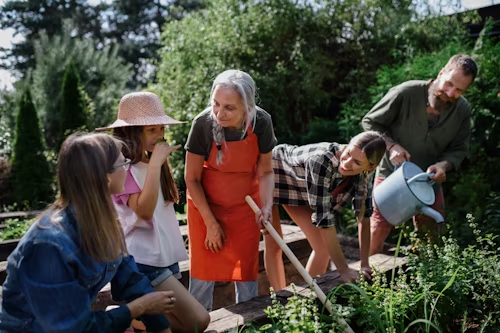
Sometimes loving your neighbor looks exactly like that—loving your actual neighbor. Maybe someone nearby could use a little help with groceries, yard work, or even just conversation. A simple, “Hey, can I help you with that?” can open doors to connection and encouragement.
You might also consider gathering a few families for a neighborhood cleanup or potluck. It doesn’t have to be elaborate—just people coming together, sharing space, and building community. It’s in those shared moments that the love of Jesus shines most naturally.
Compassion for Strangers
Kindness doesn’t stop with people we know. So many strangers are carrying silent battles. Holding the door, letting someone merge in traffic, or paying for the coffee behind you might seem small, but it leaves an imprint.
Volunteering at a local food pantry or shelter is another way to be part of something bigger than yourself. You may never know the full story of the person you hand a bag of groceries to—but God does. And sometimes, your act of kindness is the very thing that reminds them they’re not forgotten.
The Ripple Effect
Kindness doesn’t just bless the one who receives it—it blesses the one who gives it, too. It has a way of softening the atmosphere around us. It starts with one person, one moment—and it spreads.
At work, in school, even at home—kindness shifts things. Taking a moment to really listen. Offering help before it’s asked for. Speaking life when negativity is the norm. These actions plant seeds. And over time, they grow into something beautiful.
Galatians 6:9 encourages us: “Let us not grow weary in doing good…” because even when we don’t see the results right away, kindness is never wasted.
Building a Life of Kindness
Start With Intention
Kindness doesn’t just happen—it starts with a posture of readiness. Ask God each morning, “Show me who needs love today.” And then keep your eyes open.
Morning check-in: Say a short prayer before you head into your day. Ask God to help you see people the way He does.
Kind commuting: Whether you’re driving or walking, look for small ways to brighten someone’s day.
Evening reflection: At the end of the day, pause and ask, “Where did I choose kindness today?” It’s a simple way to keep your heart aligned with His.
Connect Through Stories
Kindness connects us. Host a dinner or invite a friend out just to talk about the good—stories of grace, moments where someone’s kindness made a difference. When we share these stories, we’re reminded of what’s possible. And we inspire others to do the same.
Kindness Is Contagious
You won’t see headlines about it, but kindness is all around. Communities rallying around someone who’s hurting. Strangers showing up with meals. Someone quietly slipping a note of encouragement into a co-worker’s bag. These moments matter.
Don’t be afraid to share your own stories—online, at church, with your family. Not to boast, but to remind others that kindness is alive and well, and we all have a part to play.
A Final Word
In a world that’s moving fast and feeling heavy, kindness is a breath of fresh air. It doesn’t have to be big. It just has to be real.
Maybe it’s a hug. A text. A listening ear. Maybe it’s picking up the phone when you don’t feel like talking, or dropping off dinner to someone who’s had a hard week. These are the holy moments—where heaven meets earth in the form of love-in-action.
Let’s be the kind of people who carry that love with us. Who choose kindness even when it’s inconvenient. Who make space for others the way Jesus made space for us.
Kindness isn’t extra. It’s essential. And in God’s hands, it’s transformational.
So today, let’s look for ways—big or small—to show the love of Christ. One gentle word, one open door, one small act at a time.