But the truth is, He’s already there. He never moved. The Rock is fixed, solid, immovable. It’s us who need to decide how far we’re willing to move toward Him.
The Rock Doesn’t Move
“The Rock doesn’t move. You must decide how far you’ll move toward it.”
That one sentence says it all. God isn’t shifting. He’s not adjusting to fit your lifestyle, your preferences, or your version of truth.
Jesus isn’t a trend. He’s not a phase. He is Petra. The immovable foundation. The Cornerstone.
“Jesus Christ is the same yesterday and today and forever.”
– Hebrews 13:8
God isn’t playing hide and seek. He’s not distant or detached. He’s present, constant, and unshaken. You don’t need to go searching for Him. You need to decide if you’re willing to move toward Him.
He won’t budge for comfort, culture, or convenience. And yet, He’s still available. Still waiting. Still faithful. He is the only stable thing in a crumbling world.
Cornerstone or Stumbling Block
“A stumbling block if you resist. A cornerstone if you believe.”
You either build your life on the Rock, or you trip over Him trying to build something else. There is no neutral ground.
That’s not judgment. That’s reality.
Jesus doesn’t apologize for being the truth. He doesn’t twist to accommodate you. He invites you to be transformed or be confronted.
“Jesus was deeply distressed at their stubborn hearts.” – Mark 3:5
He wasn’t mad. He was grieved. Grieved because the Rock was right in front of them, and they refused to move.
Rock or Refuge
So what is He to you, really?
Here’s how it breaks down:
Rock = strength, permanence, stability, faithfulness
Refuge = safety, shelter, comfort, deliverance
He’s not either or. He’s both.
The Rock doesn’t just confront you. He holds you. Covers you. Delivers you.
But here’s the truth: you don’t get to have Him as refuge until you surrender to Him as Rock.
You don’t need to find the Rock. You need to stop fighting it.
Let’s Be Real
We keep chasing soft things. Things that won’t demand anything of us. Things that can’t actually save us.
But softness doesn’t save. The Rock does.
So no, the Rock doesn’t move. The real question is:
A personal letter from a grieving mother — 32 years later
Today would have been my daughter Kaitlyn’s 32nd birthday. She died when she was just 2 months old.
I usually share faith encouragement and bold reflections here. But this post is different. It’s personal. It’s raw. It’s written from the deepest part of my story, the one most people don’t see.
And this year, the grief hit harder. Because over 100 lives were lost in the Texas floods this month. And among them were 27 girls. Some were young. Some were teen camp counselors. All were somebody’s child.
My heart broke for those parents. Because I know what it feels like to wake up thinking it’s going to be a good day… And then it isn’t.
I found Kaitlyn in her bassinet on a Sunday morning, September 19, 1993. That morning split my life in two. There was before. And there has been everything after.
It’s been 32 years. And I still cry. I still miss her. I still wonder who she would have been.
This letter is for anyone feeling that same ache.
For the Ones Who Are Missing a Child Today
I don’t have fancy words. Just a broken heart that still beats.
Some parents dug through mud. Some waited for news that shattered them. And some of us still live with a silent kind of loss that the world doesn’t even see.
There are no words that make this better. I wish there were.
But somehow, you get stronger. You learn to carry it. Some days it crushes you. Some days you stand up anyway.
And when the world forgets their name, or moves on from your grief, just know this, there are others out here who still remember. Who still miss. Who still ache. You’re not as alone as it feels right now.
Your child mattered. So does your sorrow. And even though I don’t know your name, I’m crying with you.
If this letter finds you in your grief, please know you’re seen. If you’re a fellow parent who’s lost a child , no matter how long ago, I’m standing with you today.
Her name was Kaitlyn. She mattered. And so does your child. So do you.
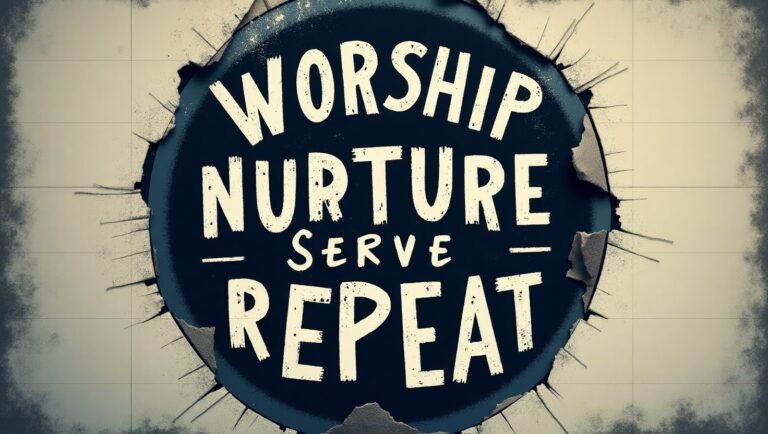
And at first glance, it looked right. Sounded right. But the longer I sat with it, the more it bothered me.
Because if that’s the rhythm of the modern church, we’ve got to stop and ask, What are we actually worshiping? Who are we nurturing? Who are we serving? And what, exactly, are we repeating?
Worship?
Worship isn’t worship anymore It’s a full-blown auditioned performance
You need lights, fog, a stage, a clipboard, and a mic You better look the part Sing the part Match the vibe
Meanwhile Jesus is standing outside the building knocking And nobody hears Him over the drum break
We sing songs about ourselves About our strength About how God destroys our enemies
Where’s the reverence? Where’s the adoration for a God who gave His Son to save us by grace, not hype?
Nurture?
Who are we nurturing? There are fewer disciples now than ever
Plenty of followers Not enough disciplers Not enough people willing to walk with the messy Only the polished
We have entire ministries built around branding and growth But we can’t even disciple a new believer through the Gospel of John
Serve?
We serve the stage The schedule The safety of people who look like us
But that single mom down the street? The one with the three kids and no car? We don’t serve her, she’s not a “member” She doesn’t tithe She’s not in a group So she’s not our “assignment”
This is the state of the Church And we pretend this is normal
Repeat?
Let’s do it all again next Sunday With a fresh flyer and better transitions
Meanwhile, the American rhythm is Eat. Sleep. TV. Home improvement. Repeat.
And this watered-down religion? This is what we’ve discipled people into
At this rate, the Great Commission will take another 150 years Families are breaking Churches are branding And people are walking away because they’re starving for something real
If this sounds harsh, it’s because it is It should be
Because Jesus didn’t die for this He didn’t say Repeat He said Go
So maybe it’s time we crash the cycle Tear down the slogans And stop worshiping a system that doesn’t look anything like the One we claim to follow
When people came to Jesus and said they wanted to follow Him, He told them to drop everything. Sell it all. Leave everything behind. Don’t even bury your dead, just follow. That’s a bold sentiment.
He told them to take nothing with them. No money. No extra shirts. Just their shoes.
Following Jesus was never supposed to be safe. It was never supposed to be easy. And it sure was never supposed to win you popularity points.
We live in a world (and honestly, a church culture) that pressures us to be palatable. To tone it down. To make Jesus more “marketable.”
But the real Jesus? He flipped tables. He broke religious rules. He called out hypocrisy. He made people uncomfortable.
Even when He told people not to spread the word, they couldn’t help it. Jesus didn’t blend in, even when He wanted to lay low. He was radical. He did not come to play it safe.
And the Pharisees hated Him for it. They hated Him enough to plot against Him. Mock Him. Nail Him to a cross.
So if you feel like you don’t fit in. maybe that’s exactly where you’re supposed to be.
He didn’t call you to blend in. He called you to follow.
And that road? It’s narrow. It’s costly. It won’t always get you applause. But it leads to real life.
You’re not here for them. You’re here for Him.
So keep showing up. Keep standing firm. Keep choosing faithfulness over fitting in.
Let the world misunderstand you. Let the Pharisees criticize. Let the system roll its eyes.
You’re not here to blend. You’re here to be set apart. You weren’t called to be comfortable. You were called to be courageous.
You weren’t made to water Him down. You were made to lift Him up. The crowd might not clap. The algorithm might not care. But Heaven sees you.
I used to think the hard part was the breaking. But sometimes, it’s the pausing that undoes you.
There’s a pause in every story that feels like the end, but it’s not. I call it the comma, that space between who you were and who you’re becoming. Sometimes it can feel more disorienting than any disaster.
For me, that comma came like the eye of a hurricane.
I’ve literally stood outside during the eye of a hurricane, that eerie stillness where everything suddenly goes quiet. It’s so peaceful and quiet. It’s the backside of the storm that does the real damage.
I was surviving in the States, but that’s all I was doing. Running two businesses, holding down a full-time job, and living on edge. It wasn’t sustainable. And deep down, I knew it.
After years of exhaustion, I finally stepped off the hamster wheel. But now I don’t know how to just breathe. I wasn’t falling apart in a dramatic way. But it was wearing me down. Quietly.
Saying yes to Mexico felt like a reset. A moment that felt like a deep breath — an exhale.
But here’s the part I didn’t expect:
Life after the comma is still messy.
We live with flooding. We live in the unknown. Some days still feel heavy. And I’m still adjusting to the quiet, the simple, the slow way of life here.
In the quiet there is space for a type of grace I didn’t have room for before.
I’m still learning how to be still. How to not brace for the next crisis and just remain calm.
The comma is where God catches us. It’s not the end. It’s the space where the next sentence gets written, not in chaos, but in quiet surrender.
Maybe you’re in a comma season too.
If you are, don’t quit in the pause. Don’t go back to what broke you. Don’t go back just because you don’t know what’s next.
The pause isn’t the end. It’s where the next part of the story gets written.
Discover what it means to love like Jesus in this devotional from the Fruit of the Spirit series. Includes Scripture, reflection, and journaling prompts.
Love That Looks Like Jesus | Fruit of the Spirit – Week 1 Devotional
Scripture Focus: “But the fruit of the Spirit is love, joy, peace, forbearance, kindness, goodness, faithfulness, gentleness and self-control. Against such things there is no law.” – Galatians 5:22-23 (NIV)
What Does “Love That Looks Like Jesus” Mean?
What Does “Love That Looks Like Jesus” Even Mean?
When people say “love,” most of us think about feelings — warmth, kindness, being nice. But Jesus didn’t just feel love. He lived it. Every day. For people who didn’t deserve it, didn’t ask for it, and couldn’t pay Him back.
This isn’t fluffy love. It’s not performative. It’s not “be nice and smile.” It’s real. It’s costly. It’s Christ.
Jesus’s love was:
Active — He fed people, healed people, helped people. Not because it was easy.
Sacrificial — He gave everything for people who ran.
Unchanging — He never pulled back when people failed Him. He stayed.
That’s what we’re called to. Not Instagram love. Not “good vibes only” love. Jesus love.
This is agape love, a selfless, divine kind of love—and is what we, as followers of Christ, are called to embody.
A Gut-Check Example: John 13
Jesus washed His disciples’ feet.
Let that land: God in the flesh got on the floor and cleaned the dirt off their feet.
Even Judas. (Sit here with that one for a minute) Even Peter.
He didn’t say, “You’re worthy.” He said, “I’m willing.” That’s the kind of love that flips everything upside down.
How Do We Live Like That?
If we’re serious about following Jesus, love can’t just be a theory. Here are three ways to actually do it:
1. Put Others First
Jesus didn’t chase comfort. He looked around and asked, Who can I serve right now? You don’t need a spotlight. Just ask: What would love do here?
2. Forgive When It Hurts
Jesus forgave while they were killing Him. If you’re waiting until it’s easy, it won’t happen. Ask Him to help you let it go. Even if it’s just a small start.
3. Love With No Strings Attached
Jesus didn’t love based on effort, appearance, or payback. Neither should we. Real love shows up even when they don’t deserve it.
Reflection Gut-Checks
Who’s hard to love right now? Be honest. What would Jesus’s love look like toward them?
Is selfishness stopping you from showing up the way Christ did?
How has God shown you grace lately — and how can you pass that on?
Prayer (Straightforward, Not Fluffy)
God, I can’t love like You without You. I get in the way. I want comfort. I want to be right. I want to protect myself.
But You loved me when I was a mess. And You still do. Help me love people the way You love me — for real.
Change my heart. Kill my pride. Fill me with Your Spirit. Make it real. Make it loud. Make it Yours. Amen.
Final Push
You’re not going to love perfectly. Me neither. But the Holy Spirit will shape you — if you let Him.
This week, don’t overthink it. Start with the next person in front of you. And let love look a little more like Jesus.
“When anxiety was great within me, your consolation brought me joy.”
That hits, doesn’t it? You ever have days like that? When anxiety isn’t just whispering, it’s screaming? Yeah. Me too.
This verse doesn’t offer a fix. It doesn’t slap a Bible band-aid on the pain. It just tells the truth.
Anxiety was great within me. Not a little worry. Not a vague unease. This was a full-body, can’t-breathe kind of day. And right in the middle of it, God showed up.
Not with a fix. Not with a fast-forward. Just comfort. Just presence. Just Him.
And somehow, that was enough. He didn’t erase the anxiety. He brought joy through it. That’s a whole different kind of miracle.
If that’s where you are, I see you.
Maybe your thoughts won’t shut up. Maybe your chest is tight. Maybe you’re exhausted from pretending you’re fine.
Yeah. I’ve been there more times than I can count.
It doesn’t say, “stop worrying.” It just says: the anxiety was real. Heavy. And God came anyway.
So take a minute. Let God hold you. Let Him carry the joy, because honestly? There are days I just can’t find it on my own.
Marriage isn’t a cruise-control kind of thing. It’s not just about sharing a bed, splitting bills, and tagging each other in memes.
It’s not just a contract or a partnership, it’s a covenant. One that’s supposed to include God in every part of it.
When faith meets marriage, it stops being about getting by and starts being about purpose.
Prayer Isn’t Optional — It’s Fuel
If you’re married and not praying together, you’re fighting battles without backup. Prayer isn’t just a “sweet idea”, it’s how you survive the hard days and stay synced up on the good ones.
You don’t need long-winded church talk. Just honesty. Five minutes before bed. A breath before the day starts. Ask God for help. Out loud. Together.
Couples who pray together consistently don’t just “feel closer”, they are closer. Because prayer:
Builds trust
Softens pride
Brings God into the conversation before your ego takes over
Say What You’re Really Carrying
Prayer isn’t just about talking to God. It’s also a place to be honest with your spouse.
Bring the stress. Bring the disappointments. Bring the stuff you’re afraid to say out loud.
And don’t just pray about it, pray through it.
When one of you is struggling, the other gets to stand in the gap. That’s not weakness, that’s warfare. Marriage isn’t two strong people pretending it’s all good. It’s two flawed people learning to lift each other up, over and over.
This Isn’t About Perfect Routines. It’s About Real Faith.
You don’t need a marriage devotional and a candle-lit prayer circle. You need to show up.
Real communication starts with listening, not listening to win, not listening to fix — but listening to understand.
That means:
Don’t interrupt
Don’t roll your eyes
Don’t plan your comeback while they’re still talking
Stay present. Validate how they feel, even if you don’t agree. This is how emotional safety gets built and how trust stays intact.
Let Scripture Set the Tone
When you don’t know what to say, let the Word speak first.
“A gentle answer turns away wrath, but a harsh word stirs up anger.” (Proverbs 15:1)
That one verse can de-escalate a fight before it ever starts. Let God’s Word guide the way you talk, and the way you respond.
Don’t just read it. Reflect on it. Let it shape your tone, your posture, and your priorities.
Forgiveness Isn’t a Side Note — It’s the Way Forward
You’re going to mess up. So will they.
What makes or breaks a marriage isn’t the absence of conflict, it’s how you handle it.
Real forgiveness means naming the hurt, owning your part, and choosing to let go of bitterness. Not brushing it off. Not shoving it down. Choosing grace instead of pride.
That’s where healing happens. That’s where peace starts.
You’re Not Supposed to Do This Alone
Marriage needs community.
Get around people who love Jesus and love each other. Find couples you can learn from. Let somebody speak into your blind spots.
Join a small group. Get prayer. Share the hard parts. You’re not weak for needing support, you’re wise for seeking it..
Your Marriage Has a Mission
God didn’t put you together just so you could live together and raise kids. He put you together for mission.
What burden do you both carry? What breaks your heart? What makes you come alive?
Serving God together doesn’t have to be loud or public. But it does need to be intentional. A kind word. A meal dropped off. A shared yes to something that honors Jesus.
Purpose brings unity. Mission brings meaning.
Facing Hard Seasons Together
Every marriage will face pressure, finances, family, health, loss. But those hard seasons don’t have to break you.
Talk honestly. Pray even when you don’t feel like it. Ask God for strength you don’t have on your own.
Faith doesn’t make the storm go away, but it does give you something solid to stand on while it rages.
Don’t Tap Out When It Gets Hard
Marriage isn’t about perfection. It’s about faithfulness.
It’s about:
Showing up again
Choosing grace again
Letting God reshape your hearts again
Whether you’ve been married for 30 days or 30 years, there’s always more to grow into. Always more to surrender. Always more of God to discover — together.
There’s something powerful about opening the Bible together as a family. Family devotions invite God into the everyday rhythm of your home and remind everyone — from the youngest to the oldest — that faith is foundational.
Choose a time that works for your family’s routine, whether before dinner, after breakfast, or right before bed. It doesn’t have to be long or complicated. Read a short passage, pray together, and talk about what it means. Even young children can engage when stories are made age-appropriate. Reading something like Noah’s Ark, followed by a craft or reflection on faith, makes the Word come alive.
Families who consistently engage in spiritual practices together often report a deeper sense of peace and unity. It’s not about perfection — it’s about presence.
Step 2: Practice Open Communication
A God-centered home is one where honesty is welcomed and feelings aren’t brushed aside. Make space for everyone to be heard — whether they’re celebrating something, struggling with something, or working through questions about life and faith.
Weekly family check-ins can be a great rhythm. Create a time to reflect, pray together, and talk openly. You might be surprised how much your family grows just by making room to listen. Strong communication isn’t just good for solving conflict — it builds trust and draws everyone closer.
Step 3: Embrace a Lifestyle of Prayer
Prayer isn’t just something reserved for mealtimes and bedtime routines. It’s a way of life — a posture of the heart. Create an environment where prayer is natural, normal, and woven into everyday moments.
Pray in the car before school drop-off. Pause to pray when someone is having a hard day. Ask your kids how you can pray for them. And don’t forget to share the ways you’ve seen God answer — it builds faith to look back and remember.
Over time, prayer becomes more than a discipline. It becomes a source of peace, connection, and daily strength.
Step 4: Create a Family Mission Statement
Your family has a unique calling, and a mission statement can help you articulate it.
Sit down together and talk about your shared values. What matters most to you? What kind of home do you want to build? What kind of legacy do you want to leave? Use words like faith, love, service, kindness, or generosity.
Once you’ve crafted your mission, write it out and display it somewhere visible — the kitchen, the hallway, the family room. Let it serve as a daily reminder of who you are and what you stand for.
Step 5: Serve Together
Serving as a family strengthens more than just your community — it strengthens your hearts.
Find ways to serve together regularly. That might mean helping at a food pantry, participating in church events, preparing meals for a neighbor, or volunteering with a local outreach. These shared experiences create lasting memories and deepen your family’s sense of purpose.
More importantly, they show your children that faith isn’t just about words — it’s about how we show up in love.
Step 6: Foster a Spirit of Gratitude
Gratitude changes the atmosphere of a home. It softens hearts, shifts perspectives, and invites joy.
Start small: go around the dinner table and have each person name one thing they’re thankful for. Keep a gratitude jar in the kitchen. Write notes to each other just to say thank you. Gratitude doesn’t ignore what’s hard — but it reminds us of what’s still good.
Over time, your family will begin to recognize God’s hand in everyday moments. And that habit of thankfulness will shape how you weather life’s ups and downs.
Step 7: Be Intentional About Quality Time
In busy seasons, it’s easy to let days pass without truly connecting. But relationships grow when we make space for each other.
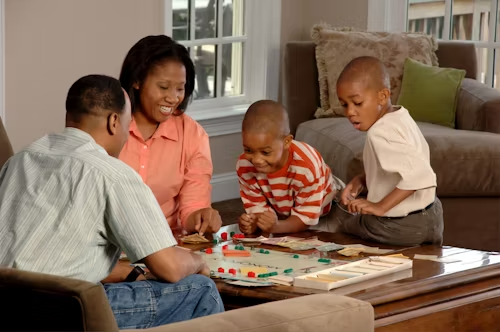
Carve out regular time to be together — even if it’s simple. Game nights, movie nights, weekend walks, baking cookies, reading aloud. These aren’t just activities — they’re moments of bonding and belonging.
And as you do, don’t be afraid to bring God into those moments. Talk about your faith. Watch something that inspires hope. Ask your kids what they’re learning about God. Let those conversations grow naturally in the context of togetherness.
Final Thoughts
Creating a God-centered family culture doesn’t happen overnight — and it doesn’t require perfection. What it does require is consistency, grace, and a heart that keeps turning back to Him.
Every prayer whispered, every devotion read, every note of gratitude shared — it all adds up. Over time, those small, faithful choices begin to form something beautiful: a home where God is known, loved, and honored.
So take the next step — whatever that looks like for your family. Trust that God will meet you in it, and that He’s already at work creating something sacred right where you are.
“Be still, and know that I am God; I will be exalted among the nations, I will be exalted in the earth.”
In our busy lives, it’s easy to overlook the value of stillness. This verse encourages you to take a moment to pause.
Reflective Insight: Each morning, dedicate five minutes for quiet reflection. Find a peaceful spot, breathe deeply, and open your heart to listen. Studies show that taking even short breaks can dramatically boost focus and productivity throughout the day.
2. Philippians 4:6-7
“Do not be anxious about anything, but in every situation, by prayer and petition, with thanksgiving, present your requests to God. And the peace of God, which transcends all understanding, will guard your hearts and your minds in Christ Jesus.”
Anxiety can rear its head first thing in the morning, but this verse offers a comforting solution. Talking to God helps you tackle daily hurdles with a sense of calm.
Reflective Insight: Start your day with a brief prayer. Jot down three concerns on a piece of paper and offer them to God. Express gratitude for at least five blessings in your life, big or small, as a way to shift your focus from worries to positivity.
3. Isaiah 26:3
“You will keep in perfect peace those whose minds are steadfast because they trust in you.”
Having trust forms the basis of achieving inner calm. Focusing on God helps you maintain peace amidst daily challenges.
Reflective Insight: Write down three aspects of your life where you can practice trust in God today. Keep this list where you can see it as a reminder in moments of uncertainty.
4. Matthew 6:34
“Therefore do not worry about tomorrow, for tomorrow will worry about itself. Each day has enough trouble of its own.”
Worry can seem unavoidable, but Jesus reminds us that every day comes with its own set of challenges.
Reflective Insight: At the start of your day, choose to concentrate on today’s tasks. Try creating a to-do list with three key priorities. This allows you to stay grounded and focused rather than overwhelmed by future stressors.
5. Jeremiah 29:11
“For I know the plans I have for you,” declares the Lord, “plans to prosper you and not to harm you, plans to give you hope and a future.”
This verse reassures us that God has a purpose for each and every day. Trusting in His plans brings peace and confidence.
Reflective Insight: Start journaling by noting down one specific goal you believe aligns with God’s plan for you today. Consider how you can achieve that goal as you move through your day.
6. Proverbs 3:5-6
“Trust in the Lord with all your heart and lean not on your own understanding; in all your ways submit to him, and he will make your paths straight.”
Trust is crucial for starting your day on the right foot. This verse encourages you to align your decisions with God’s wisdom.
Reflective Insight: Each morning, think of three concerns weighing on your heart. Spend a moment submitting these in prayer before diving into your day’s responsibilities.
7. 1 Peter 5:7
“Cast all your anxiety on him because he cares for you.”
This verse reminds you of God’s deep love. Letting go of your burdens can foster peace within your heart.
Reflective Insight: Before getting out of bed, take a few slow breaths and envision your anxieties lifting away. Picture those worries resting in God’s hands, leaving you with a sense of relief.
8. Colossians 3:2
“Set your minds on things that are above, not on things that are on earth.”
This verse urges you to focus on spiritual matters over everyday distractions, establishing a mindset that nurtures peace.
Reflective Insight: Try saying a simple morning affirmation, such as “I choose to think on goodness today.” This quick mantra can center your thoughts and heart.
\
9. Psalm 119:165
“Great peace have those who love your law, and nothing can make them stumble.”
Embracing God’s Word results in profound peace. The more you engage with scripture, the more assurance you gain to handle everyday stress.
Reflective Insight: Commit to reading just one verse each morning from the Bible. Allow these words to inspire and guide you as you face challenges that may arise during the day.
10. John 14:27
“Peace I leave with you; my peace I give you. I do not give to you as the world gives. Do not let your hearts be troubled and do not be afraid.”
The peace Jesus speaks of is like no other; it is deep and everlasting. Recognizing this promise brings about a unique sense of calm.
Reflective Insight: End your morning devotion by affirming Jesus’ peace over your life. Say, “I accept your peace, Lord,” and visualize it filling your heart as you head into your day.
Embrace Each New Day with Intention
Integrating morning devotions into your routine creates a solid foundation for peace and purpose. By starting your days with scripture and reflection, you establish an atmosphere conducive to spiritual growth.
The verses shared in this post can serve as your daily anchors, calming your mind while drawing you closer to God. Whether you’re seeking strength, encouragement, or renewed hope, each scripture provides a meaningful way to connect with God each day.
May these ten verses inspire a morning practice that uplifts your spirit and steers your day. As you nurture these habits, may your heart remain full of peace, and may you reaffirm God’s loving purpose in your life.
Every day brings a fresh opportunity for connection with the divine. Embrace God’s peaceful presence as you step forward into the possibilities that await.